ERP & IoT Storytelling

Luna's Bakery Goes Digital

A polished web edition of Luna's ERP and IoT adventure, showing how a growing bakery moves from disconnected spreadsheets to integrated systems, connected sensors, and digital supply chain visibility.

Chapter 17: Internet of Things and ERPBCOR440 / IE425Operations & Supply Chain Management

What students learn in this story

As Luna's bakery expands to multiple locations, she discovers that growth creates a new kind of chaos: disconnected records, mismatched numbers, delayed decisions, and physical equipment that still operates in the dark. The story uses that chaos to explain ERP and IoT in plain language.

ERPIntegrated modules share one database so every function sees the same reality.
IoTSensors connect physical equipment and inventory to the digital system.
Cross-functional flowFinance, HR, sales, logistics, and operations work from one source of truth.
Supply chain visibilityData can travel beyond the bakery to suppliers, deliveries, and customers.
Visual Navigation

Jump by story image

These illustrated cards provide a visual way to move through Luna's digital transformation story while keeping the same polished reading style as the other bakery pages.

Act One

The Chaos Before ERP

Disconnected systems

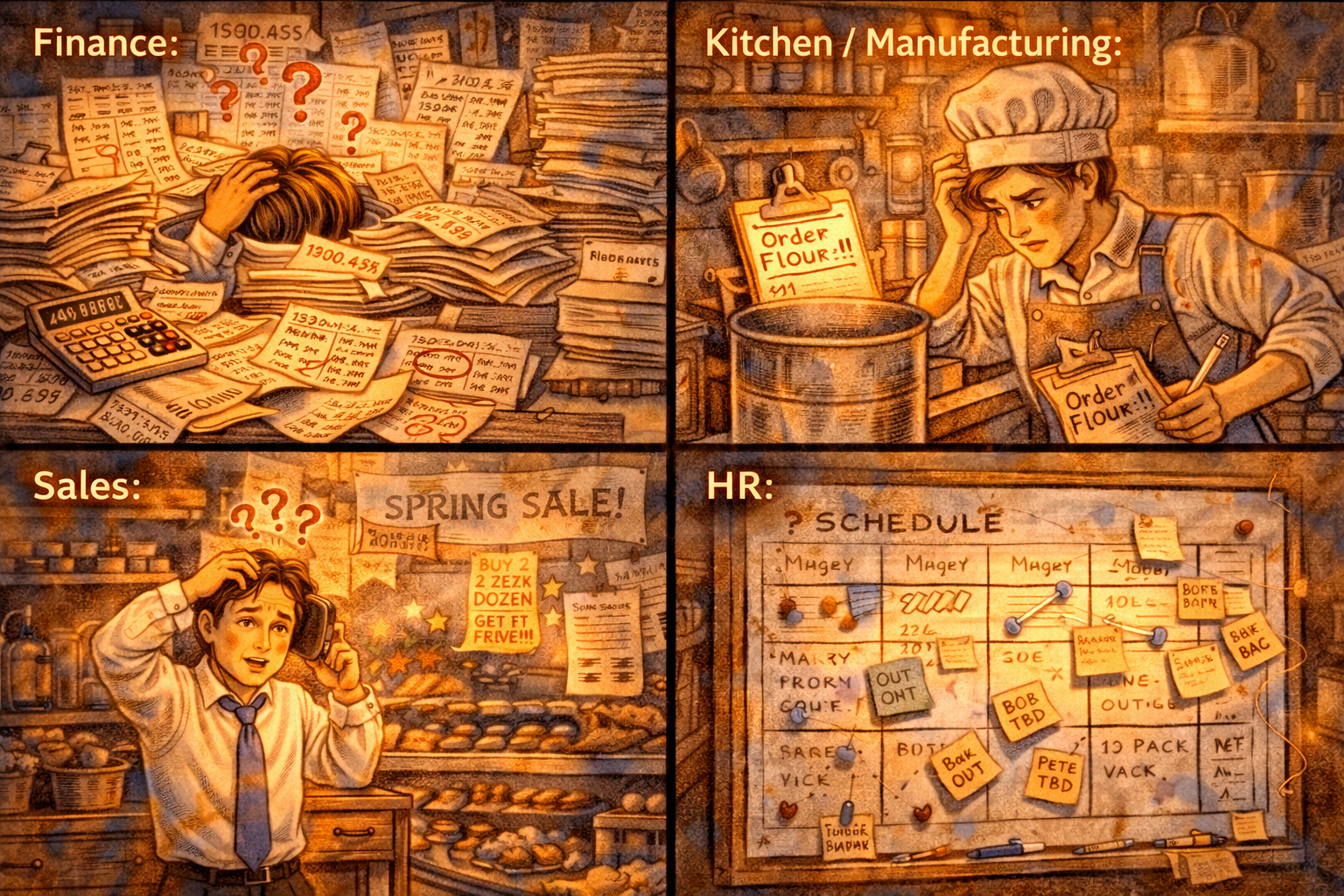
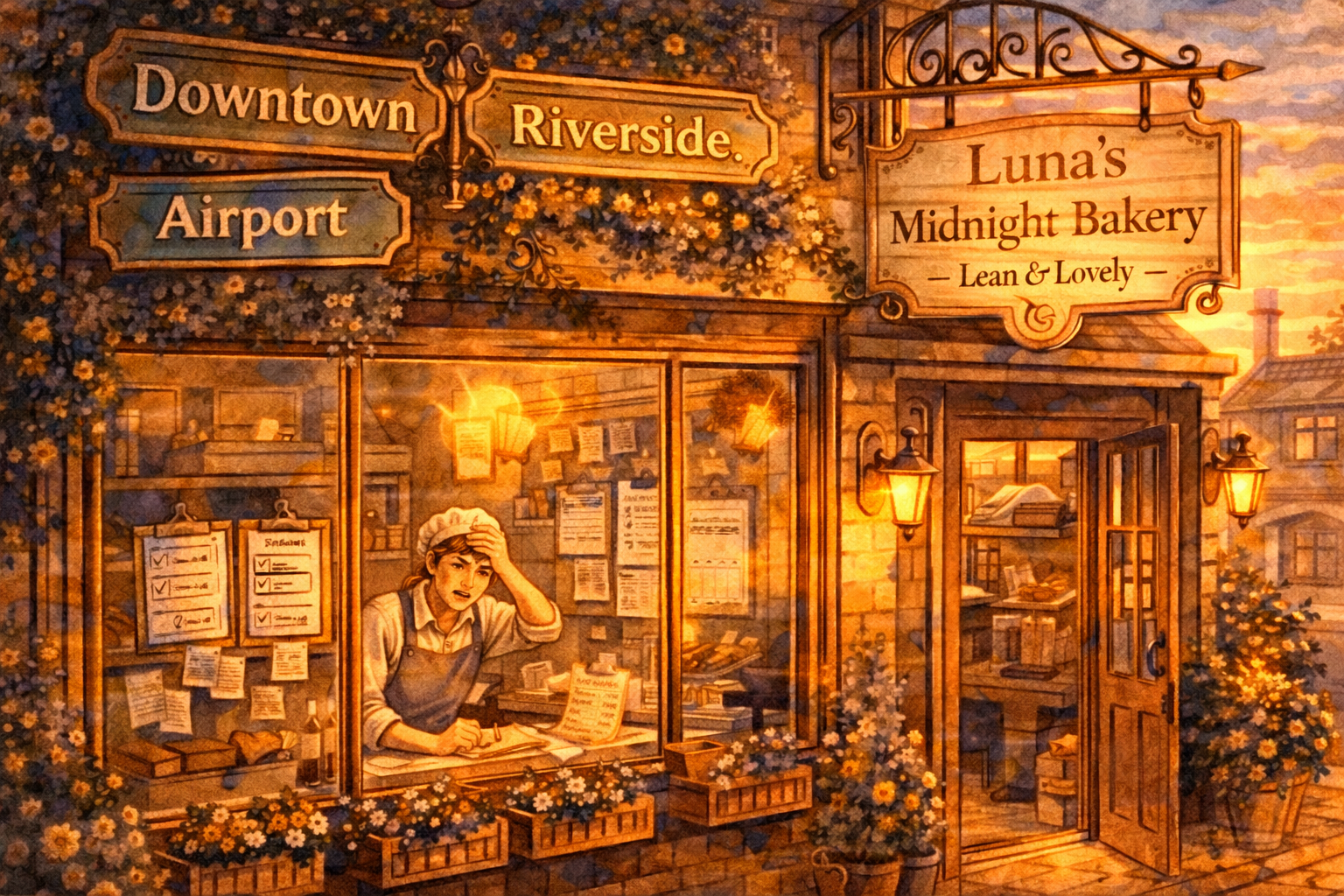
Luna's bakery had grown from one cozy shop into three locations, but growth brought a hidden problem: every department kept its own records and nothing connected cleanly.

Luna: "We sold 400 croissants yesterday, but I can't tell you how many we actually made, how much flour we used, or whether we even made a profit."

Finance relied on spreadsheets. Manufacturing and logistics used paper clipboards. Sales and marketing ran separate apps. HR tracked schedules on whiteboards and binders. The business had multiple versions of the truth.

Core lesson

This is the classic pain point that ERP is designed to solve: fragmented information creates slow decisions, rework, and confusion across departments.

Act Two

One Brain for the Whole Bakery

ERP modules and one database

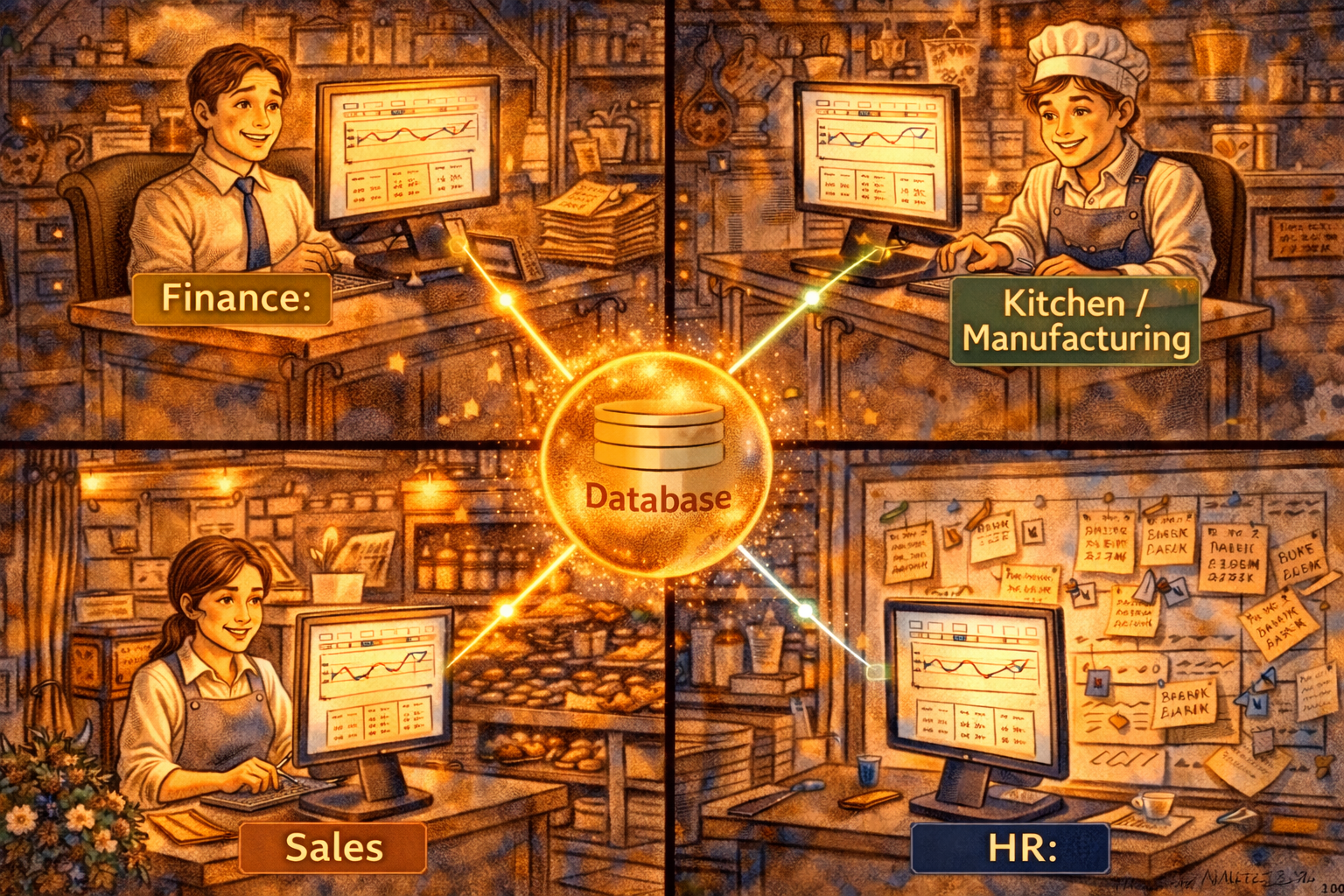
Luna discovered that ERP systems are built from modules. Each module supports a business function, but all of them connect to a single shared database.

That means one sales transaction can immediately affect inventory, revenue, replenishment, planning, and reporting everywhere else in the system. The key idea is not just software centralization. It is data integration.

Luna: "One system, one database, and every department sees the same information in real time?"
Act Three

Smart Ovens & Talking Flour Bins

IoT enters the bakery

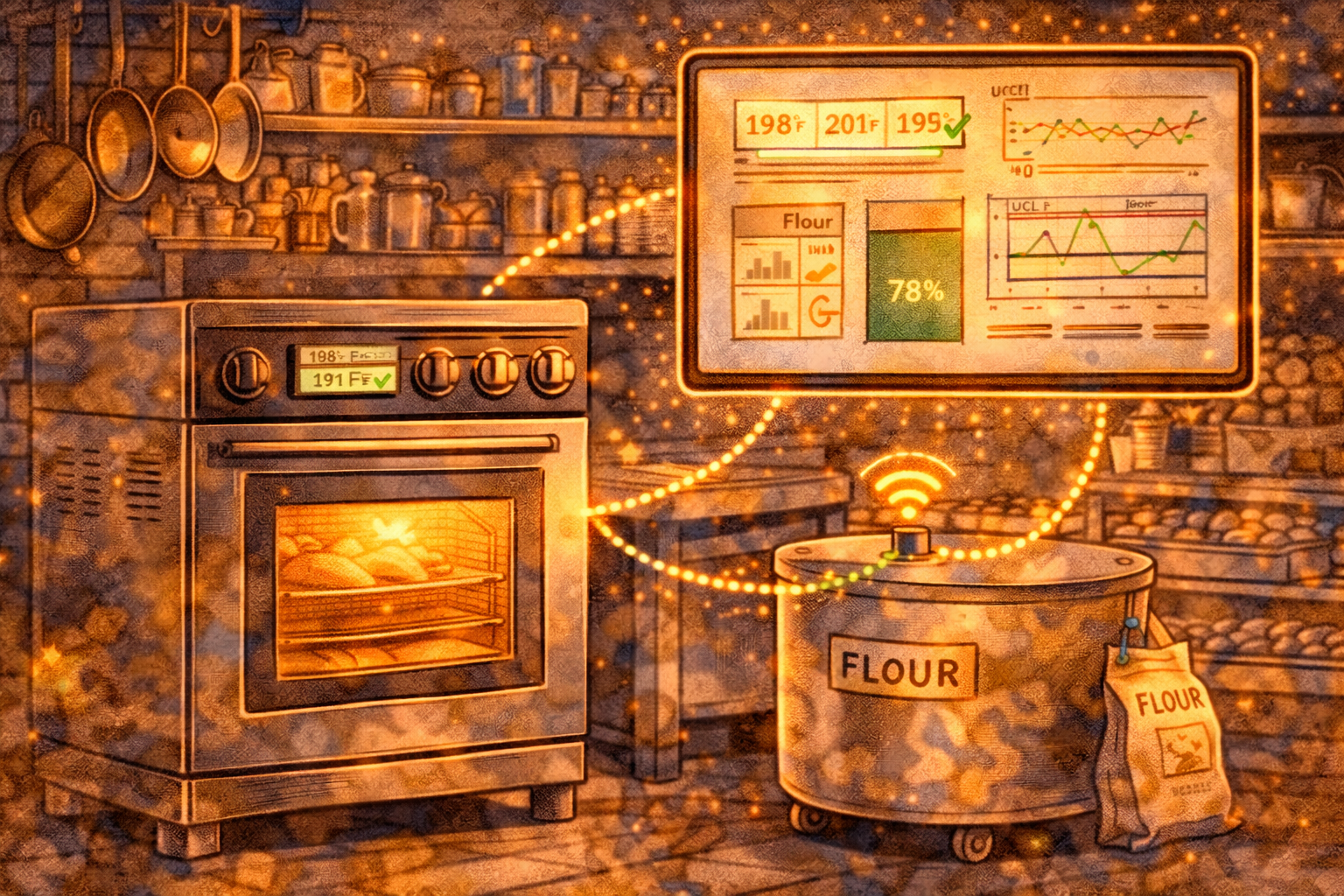
ERP helped Luna manage transactions, but it still could not see what was happening physically inside the bakery. That changed when she discovered the Internet of Things.

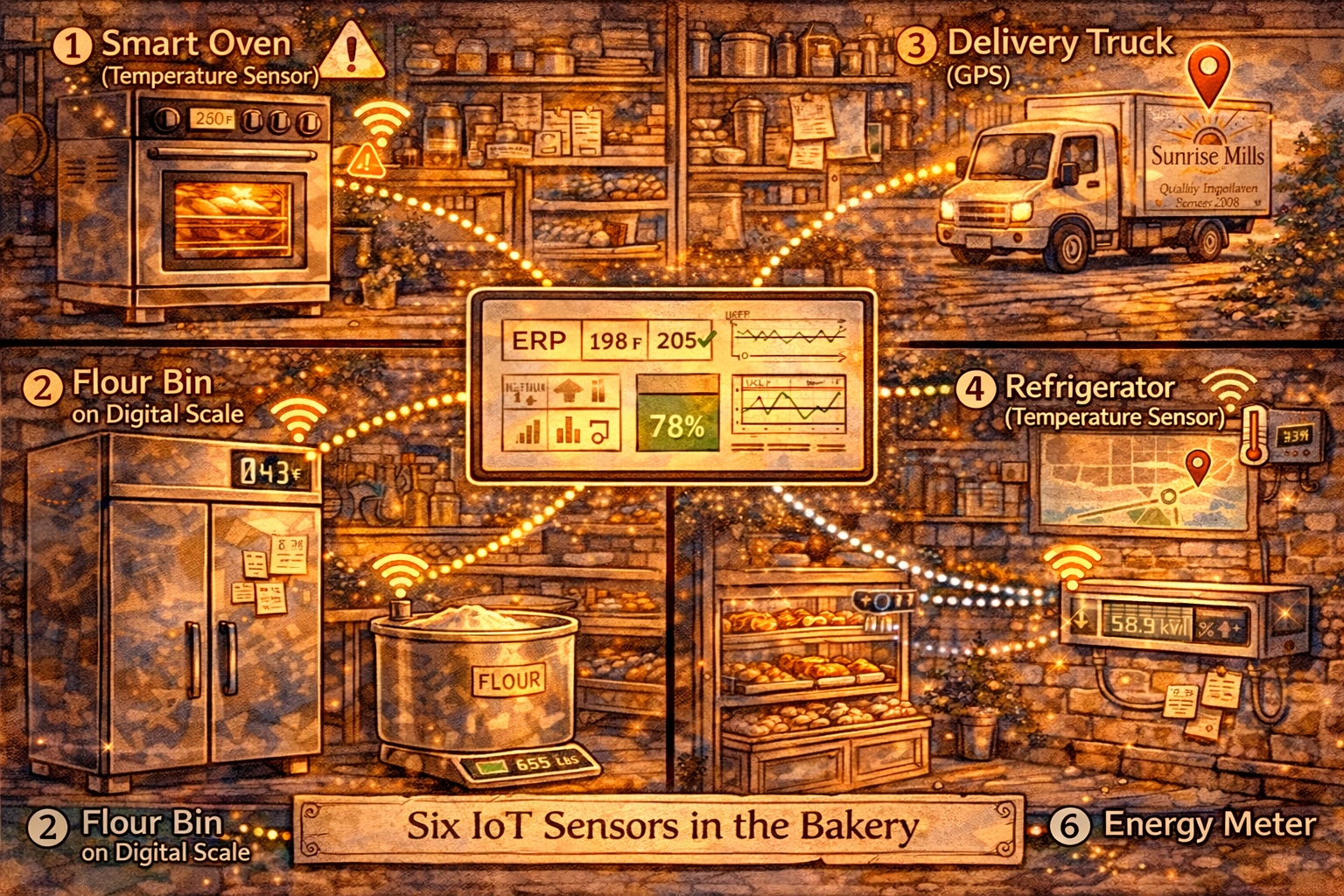
  • Smart ovens send temperature alerts and can trigger automatic adjustments.
  • Flour bin scales track inventory levels continuously and can trigger reorder logic.
  • Delivery GPS trackers feed live ETAs into the system.
  • Refrigerator monitors detect unsafe temperature spikes before spoilage spreads.
  • Shelf sensors signal the kitchen when display stock is running low.
  • Energy meters reveal cost patterns by oven and shift.

The big idea is simple: IoT connects physical assets to digital decision-making.

Act Four

The Supply Chain Command Center

Internal and external integration

Luna realized that ERP was not just about making departments work together. It was about managing the full supply chain, from upstream suppliers to downstream customers.

Inside the bakery, the major internal chain became easier to see: Purchasing -> Manufacturing -> Sales & Distribution. ERP ties these together so planning becomes coordinated instead of reactive.

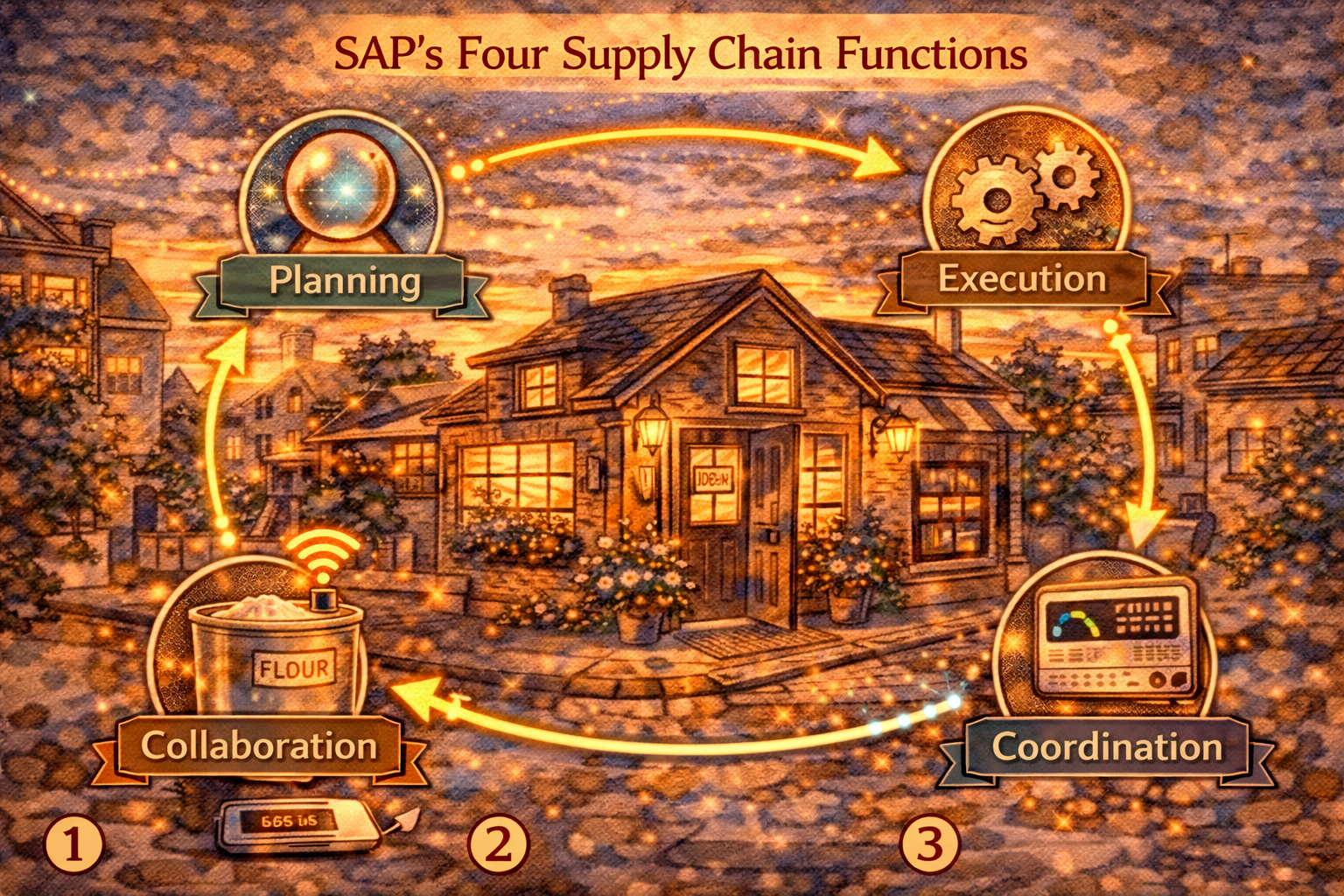
She also learned that large ERP ecosystems such as SAP organize supply chain capabilities around broader planning, sourcing, production, and distribution functions.

Act Five

Luna's Digital Transformation

From firefighting to system thinking

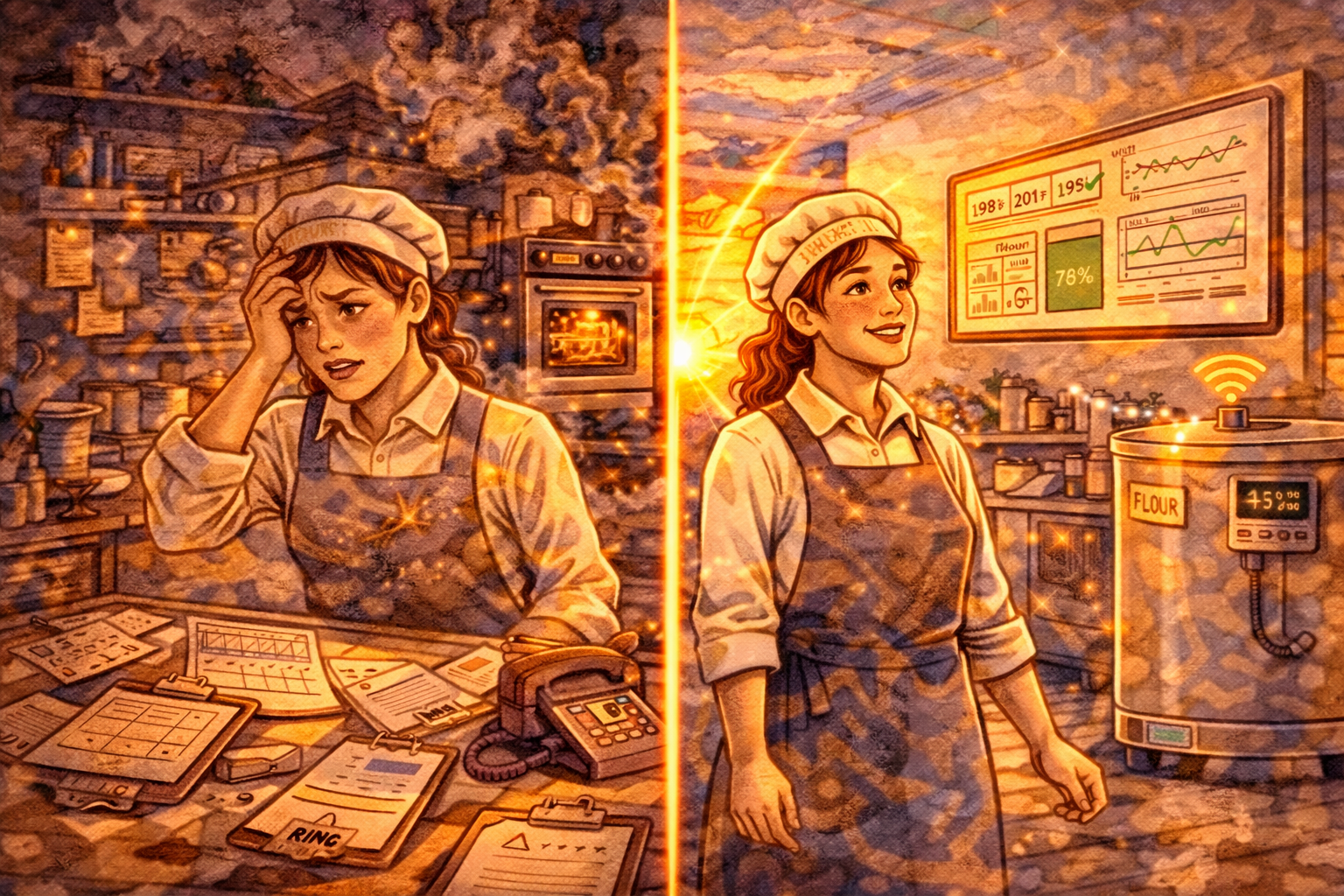
Six months later, Luna's bakery looked different because the business now ran on connected information. Departments stopped arguing over whose numbers were right, and equipment stopped operating as a black box.

"ERP isn't just software. It's a way of thinking."

Once every part of the bakery spoke the same language and used the same data, Luna could move from daily firefighting to real managerial decision-making.

Quick Reference

Use this section as the fast study guide after the story. It condenses the ERP and IoT ideas into the terms and distinctions most likely to matter in class, quizzes, and review.

ERP

Enterprise Resource Planning integrates major business functions through connected modules that share one central database.

Why disconnected systems fail

Separate spreadsheets and apps create duplicate entry, delayed reporting, conflicting numbers, and poor cross-functional coordination.

ERP modules

Modules usually align to business functions such as finance, HR, operations, manufacturing, purchasing, sales, and logistics.

One transaction, many updates

A single sale can update revenue, inventory, replenishment, planning, and reporting at the same time because the data is shared.

IoT

The Internet of Things connects physical devices and sensors to digital systems so real-world conditions can be monitored and acted on automatically.

IoT examples from the story

Smart ovens, flour-bin scales, delivery GPS trackers, refrigerator monitors, shelf sensors, and energy meters all feed live data into Luna's system.

OvensBinsGPSFridgesShelvesEnergy

Internal supply chain view

Purchasing, manufacturing, and sales/distribution must work together closely for manufacturing planning and control to work well.

ERP vendors

SAP is the largest ERP vendor globally. Microsoft Dynamics is often positioned for smaller businesses. An ERP setup does not always have to come from one vendor.

Big managerial takeaway

ERP and IoT are not only about software and hardware. They change how managers think by making the business visible as one connected system.